Support builds for IMF capital boost

21/09/2011 | Taimur Ahmad and Anthony Rowley

Leading officials have thrown their weight behind the idea of a capital increase for the Fund for it to tackle ongoing sovereign debt crises

Support is growing for a substantial increase in the IMF’s lending capacity that would better equip the institution to tackle ongoing sovereign debt crises.

Leading emerging market officials have thrown their weight behind the idea of a capital increase for the Washington lender – but have said such a move should be accompanied by more governance reform.

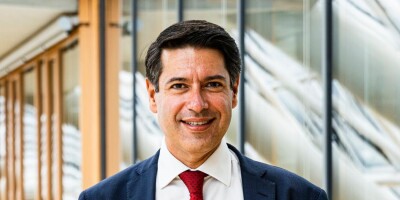
Mexican central bank governor Agustin Carstens told Emerging Markets: “The Fund urgently needs to be capitalized. We have seen the amount of resources that Greece has needed. If other European countries would need more resources, the Fund would not have enough firepower.

“This would also be a very good opportunity for the rebalancing of the voting power that is needed in the fund,” said Carstens, who competed against Christine Lagarde for the IMF managing directorship.

Kemal Dervis, director of the global economy programme at the Brookings Institution, said the Fund requires “a doubling of its current capacity to lend” if it is to oversee the world economy on behalf of all its members.

“The emerging markets should be happy that the IMF is becoming, by force of events, a truly global supervisor and lender” rather than a watchdog that only supervises developing countries. “That requires more money, and that requires governance structures that will allocate that money in a way that’s fair to all participants,” Dervis told Emerging Markets.

Pimco co-CEO Mohamed El-Erian said that while a capital increase might be needed, the IMF “won’t get [one] unless it gains credibility.

“Before even talking about more capital, people have to be convinced that the capital will be used in a credible fashion.”

IMF managing director Christine Lagarde said in a July speech that the fund may need more capital resources to deal with continuing economic crises.

“The question is, do we still have the level of resources that is now needed and appropriate to address [...] the crises,” Lagarde said at the time.

“Maybe it could do with more,” she said, adding.“In the not too distant future, we will probably have to revisit this issue.”

IMF deputy managing director Min Zhu said yesterday that heightened volatility in financial markets meant that “we probably need to prepare ourselves for a further increase in certain resources.”

But he noted that the Fund’s resources had already been expanded through a “doubling of quotas” and its New Arrangement to Borrow (NAB) credit lines. “We are quite well positioned to deal with the current global situation,” he added.

IMF deputy managing director Naoyuki Shinohara said the IMF has $400 billion in financial resources available. “That is a pretty large number but there are always extreme tail-risk scenarios that need to be taken into account. In that case, we might have to find ways to strengthen our resource base,” he told Emerging Markets.

But he added: “I do not see an increase in the IMF resource base as being a major agenda item at this moment.”

The IMF announced yesterday that it had activated its NAB facility for a further six months. The NAB is a standing set of credit lines under which 36 IMF members have committed to provide supplementary resources to the IMF, totaling up to SDR 363.6 billion (about US$571 billion). The NAB is supplementary to quota resources.

Related stories


Editor's Picks

  • CUBA: One step forward

    CUBA: One step forward

    Recent reforms have offered some hope for the island nation. But without US engagement, its propects will remain dim


In Focus: China

  1. Overhyping the Chinese RRR cut

  2. Curing the Chinese local debt hangover, part 1

  3. IMF: Crisis could slash China growth to 4%

  4. China PMI: glass half full or half empty? You decide